


Blog
Latest News
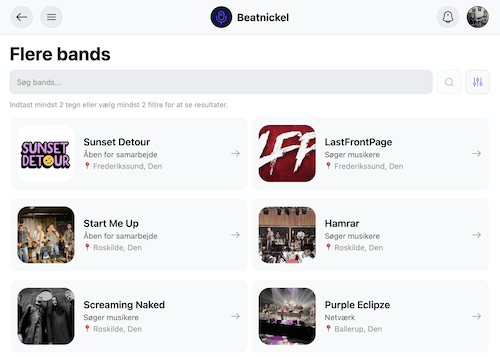
The past year with Beatnickel has been a journey from an early idea and a first version of the app to a growing community of musicians and bands. Along the way, we have learned that the music scene does not lack talent. It lacks visibility, context, and better ways for people to find each other.
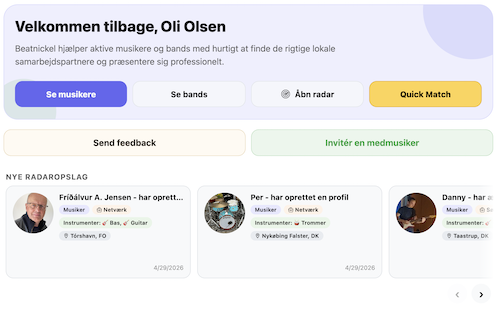
There are musicians, bands, songwriters, producers and rehearsal spaces in almost every city. The problem is not necessarily that they lack talent or the desire to play. The problem is often that they cannot find each other. Local music scenes are alive, but too much of that activity is invisible. Beatnickel can help make it visible, structured and much easier to act on.

There are plenty of talented musicians out there. The problem is not always finding talent. The problem is understanding where that talent fits right now. When you see a musician online, you often only see a photo, a short bio and maybe a link. But you miss the context: What are they looking for? What role do they want to play? Are they ready for a serious band, a casual session or just new connections?

In today’s music scene, opportunities often go to the one who responds first, not the one who fits best. But what if we prioritized relevance, chemistry and ambition instead of speed

Some of the world’s biggest bands were formed because someone placed an ad in a newspaper or magazine and hoped the right person would respond. Metallica and KISS are two powerful examples. Today, the need is the same, but the tools are different. In many ways, Beatnickel is a more modern, more precise, and more effective way to find the right people for a band project.

Every day, music opportunities are shared in Facebook groups, Messenger threads, and small private networks. The problem is that many of them quickly disappear in the flow. That means good chances to find a musician, a band, a job, or a collaboration are often lost, not because they were irrelevant, but because they became invisible.

Discover a platform built to connect musicians and bands, make it easier to find relevant local matches, and create new musical collaborations.


