
Soon available on


“It gives you exposure” – the phrase that keeps musicians stuck in unpaid work
Date:
9.1.2026
Author:
Oli Olsen
“It gives you exposure” – the phrase that keeps musicians stuck in unpaid work
Exposure has become a currency in the music industry. But too often, the promise of visibility is used as a substitute for payment. When does exposure have real value, and when is it simply unpaid work disguised as opportunity?
Most musicians have heard it. Some early in their careers. Others far later than they should have. “We can’t pay, but it will give you exposure.” The phrase sounds harmless, even well meaning. In reality, it has become one of the most effective ways to normalise unpaid work in the music industry.
The exposure economy has shifted from being a supplement to payment to, in many cases, replacing it altogether. Musicians are expected to deliver professional work in exchange for attention. Attention that is rarely measurable, rarely transferable and almost never enough to pay the bills.
Visibility is not a uniform currency
Exposure can have value. But not all exposure is equal. Playing for a relevant audience with a clear context and the potential for follow up can be a strategic investment. Playing for free in front of a random crowd, without continuity or connection, is usually just unpaid labour.
The problem arises when all unpaid gigs are framed as opportunities. When the line between strategic visibility and empty exposure disappears. That makes it difficult for musicians to say no without appearing ungrateful or unambitious.
When the risk always lands on the musician
In the exposure economy, risk is rarely shared. Musicians invest time, preparation, transport and often equipment. Organisers invest very little. If the audience does not show up or the promised attention never materialises, it is the musician who absorbs the loss.
This imbalance hits musicians in the growth layer particularly hard. Too experienced to work for free, yet still dependent on opportunities to be seen and heard. The result is a grey zone where many accept conditions they cannot realistically afford.
Algorithms amplify the problem
Social media has made visibility measurable, but not necessarily valuable. Likes, views and reach can look impressive, yet they rarely translate directly into paid work. Still, these metrics are often used as proof that exposure itself is the reward.
The pressure to remain constantly visible makes it even harder to say no. If you are not visible, you do not exist. If you decline, you lose momentum. Over time, this creates a persistent sense of falling behind.
From exposure to relationships
Exposure has the greatest value when it leads to relationships. Audiences that return. Organisers who book again. Musicians who find each other. Without relationships, exposure is fleeting and often meaningless.
This is one of the core problems of the exposure economy. It prioritises momentary attention over long term connection and community building.
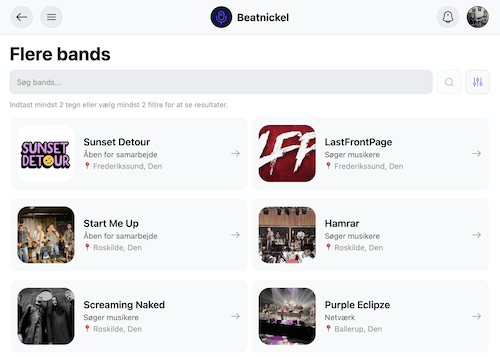
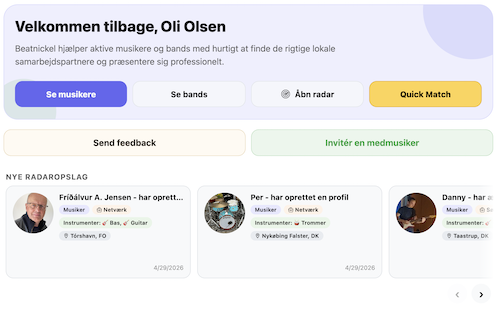
This is also where Beatnickel takes a different approach. Not by promising more exposure, but by making context and relationships visible. When musicians, bands and organisers can find each other based on experience, needs and local presence, opportunities become tangible rather than abstract.
Exposure itself is not the enemy. The problem begins when exposure is used as a replacement for payment without clear value, mutual commitment or long term perspective.
If the music industry is to become more sustainable, we must get better at distinguishing between real opportunities and unpaid work disguised as chance. Musicians need fair pay, but they also need structures where visibility leads to relationships, not just the next unpaid gig.
Otherwise, we risk a music scene where many are seen, but far fewer are able to make a living.
Other blogs




































































Discover a platform built to connect musicians, simplify bookings, and fuel creative growth.
Find us on social networks


