
Soon available on


The Algorithm of Musical Taste: Why Some Bands Click – and Others Never Find Chemistry
Date:
23.12.2025
Author:
Oli Olsen
The Algorithm of Musical Taste: Why Some Bands Click – and Others Never Find Chemistry
Why do some bands feel right from the very first note, while others fall apart despite talent and good intentions? The answer is rarely just skill. Musical taste, personality, ambition, and ways of working together often decide whether chemistry grows or disappears.
When technique is not enough
Many musicians form bands based on the obvious factors. Instruments fit. Skill levels match. Everyone lives close enough. Yet frustration, stagnation, or breakups still happen.
The problem is that technique and experience are only the entry ticket. They rarely make a band last. Two guitarists can be equally skilled, but if one loves detailed arrangements and the other wants to jam freely, tension appears quickly. Not because anyone is wrong, but because their assumptions are different.
Musical taste is identity
Musical taste is not just about genre. It is about tempo, dynamics, references, and aesthetics. About whether you prefer raw energy or polished precision. Whether you chase originality or refinement.
When musical taste does not align, it often feels personal. Ideas are not understood or taken seriously. Over time, this creates insecurity and conflict that are really about taste, not respect or ability.
Personality and communication
A band is also a social space. Some thrive on long discussions and shared decisions. Others prefer clear structures and fast choices. Some speak a lot. Others contribute quietly through action.
When personalities clash, even small decisions become exhausting. Who takes initiative. Who decides. When something is finished. Without a shared understanding of how each person works, rehearsals drain energy instead of creating it.
Ambition must be aligned
One of the most underestimated factors in bands is ambition. Not whether someone is good or bad, but what they want.
For some, a band is a creative escape alongside work and family. For others, it is a serious project with goals, deadlines, and bigger dreams. Both are valid, but when mixed without clarity, disappointment almost always follows.
One person feels pressured. Another feels held back.
Working style and expectations
How do you work together. Do you write songs collectively or with one main songwriter. Are rehearsals for experimenting or refining. Is chaos welcome or should everything be prepared.
When working styles do not match, the process becomes heavy. You start looking forward more to the breaks than the rehearsal itself. Often, that is a sign that the structure does not fit the people in the room.
From random matches to real connections
Traditionally, many bands are formed through geography and networks. Who lives nearby. Who knows someone. It is practical, but not necessarily effective.
This is where a smarter way of matching becomes essential. One that considers musical taste, ambition, personality, and working style. Not just instrument and postcode.
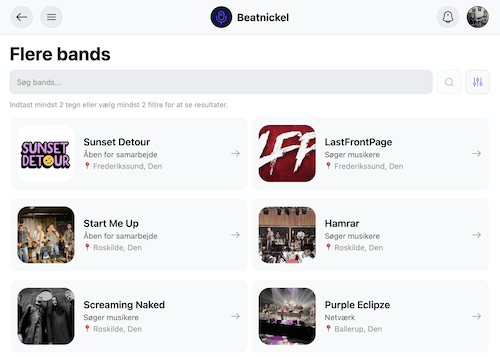
Beatnickel’s Smart Match is built with exactly this in mind. By using preferences and detailed profile information, it helps musicians find people they actually work well with. Not just those who happen to live closest.
Band chemistry is not magic. It is the result of many small matches. Musical taste, personality, ambition, and working style matter far more than most people realize.
When the right people find each other, everything feels lighter. Rehearsals give energy. Decisions are easier. The music grows naturally.
The better we become at matching what truly matters, the fewer bands fall apart. And the more musicians get to experience what it feels like when everything finally clicks.
Other blogs
















































































Discover a platform built to connect musicians, simplify bookings, and fuel creative growth.
Find us on social networks


