
Soon available on


Live Shows in 2026: What Venues Really Look For – and What Musicians Need to Understand
Date:
17.12.2025
Author:
Oli Olsen
Live Shows in 2026: What Venues Really Look For – and What Musicians Need to Understand
Booking is no longer a simple yes or no. Venues today work with risk assessments, audience data, EPK quality and social media insights. Many musicians misunderstand the process and assume it is about talent alone. This article breaks down how venues think in 2026 and how Beatnickel aims to make their decision-making faster and easier.
How booking works in 2026: It is all about risk
For venues a concert is not just art. It is logistics, economics and probability. Every date in the calendar represents either potential revenue or potential loss. That is why modern venues approach bookings with a data-driven mindset. They estimate risk:
• How many people will show up
• What the show will cost
• Whether the artist can activate a real audience
• Whether the event fits the venue's profile
When musicians do not understand this logic they often take rejections personally, even though it is mostly about reducing uncertainty.
Audience potential is the key metric
Regardless of genre venues try to predict audience demand. They look at local followers, past attendance, online engagement and activity in the surrounding music scene. It is not about being mainstream. It is about being relevant in a specific local ecosystem.
Many musicians struggle here because their online presence does not clearly show their reach. Without this information bookers have little to work with and the risk increases.
A strong EPK is a decision tool
Your EPK is not decoration. It is a working document for venues. In 2026 bookers expect an EPK to clearly communicate:
• Who you are
• What kind of crowd you attract
• Past live shows and audience reactions
• High quality live video
• Technical requirements and stage needs
A messy or incomplete EPK means more work for the venue. More work often means a no.
Social media as a signal
Venues do not check social media for glamour. They check it for signals. They evaluate engagement, activity, community interaction and whether the artist can drive ticket sales. It is not about follower count alone but about momentum and consistency.
Musicians who ignore social media often make it harder for venues to assess their concert potential.
Why musicians misunderstand the process
Many musicians still believe that booking is about emailing a song link and hoping for a reply. Venues see it very differently. They need clarity, data and a quick overview so they can make informed decisions under pressure.
In 2026 professionalism is expected. Musicians who cannot explain themselves as a product often lose gigs to those who can.
Beatnickel as the bridge
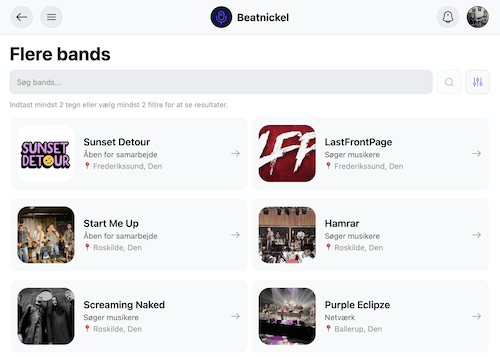
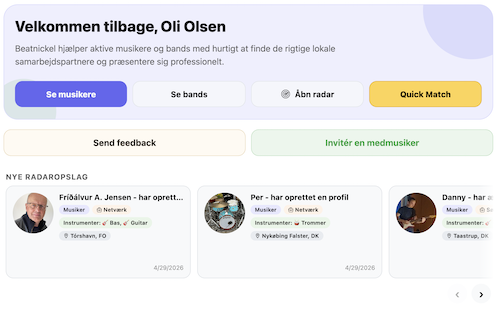
Beatnickel is working to create profiles that give venues exactly what they need. Instead of long emails and scattered information venues will be able to see:
• Audience potential and local reach
• Activity level and relevance
• Professional EPK and tech specs
• Engagement data in real time
This reduces risk for venues and increases booking chances for musicians who are truly ready to play.
Booking in 2026 requires understanding venue logic. It is not only about music but about data, clarity and reducing uncertainty. Musicians who understand this get more gigs. And with Beatnickel it becomes easier than ever to present yourself professionally and give venues the confidence to book you quickly.
Other blogs



























Discover a platform built to connect musicians, simplify bookings, and fuel creative growth.
Find us on social networks


