
Soon available on


The music scene doesn’t lack talent. It lacks infrastructure.
Date:
2.2.2026
Author:
Oli Olsen
The music scene doesn’t lack talent. It lacks infrastructure.
There are more skilled musicians, bands, and projects than ever before. Yet the music scene still struggles to hold together. The problem isn’t creativity or ambition. It’s the absence of shared structures that connect people, projects, and opportunities over time.
When challenges in the music scene are discussed, the conversation often turns to talent, competition, or an oversaturated market. But if you look closer, a different picture appears. Talent is abundant. So is the desire to create, play, and collaborate. What’s missing is something more fundamental.
Today’s music scene is fragmented across platforms, locations, and levels. Musicians look for bandmates in one place, rehearsal spaces in another, gigs somewhere else, and recognition somewhere entirely different. Very little is connected, and valuable knowledge and relationships are lost along the way.
The result is a music ecosystem where everyone is busy, but rarely moving in the same direction. Projects emerge quickly, then disappear just as fast, because there are no structures to carry them forward.
Talent without cohesion
Most musicians know the feeling of starting over again and again. New band. New network. New posts. New messages. Each time, relationships must be rebuilt from scratch, often in systems that were never designed to support long term musical collaboration.
There are plenty of content platforms and social networks, but they are built for attention, not cooperation. There are booking platforms, but they are built for transactions, not communities. None of them provide the connective tissue a living music scene needs.
The absence of shared spaces
A healthy music scene needs shared spaces. Not only physical rehearsal rooms and venues, but also digital environments where musicians, bands, and other actors can meet, be visible, and grow together.
Today, these spaces are scattered and often short lived. Groups disappear. Platforms change direction. Algorithms prioritize visibility over relationships. This makes continuity and collective memory in the music scene difficult to sustain.
Infrastructure before exposure
Before talking about reach, likes, and streams, there must be structure. Infrastructure is about making it easy to find each other, understand intentions, and move from idea to action without constant friction.
It’s about clear profiles, transparent goals, and connections that don’t vanish when a post drops out of a feed. It’s about creating a foundation that young musicians, amateurs, and professionals can stand on at the same time.
Beatnickel as shared infrastructure
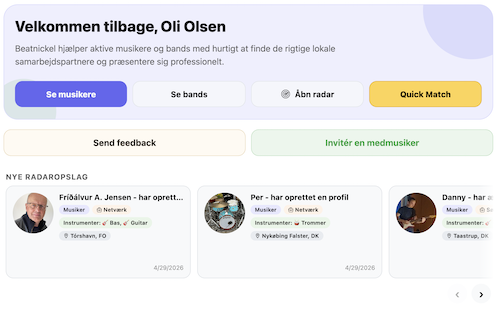
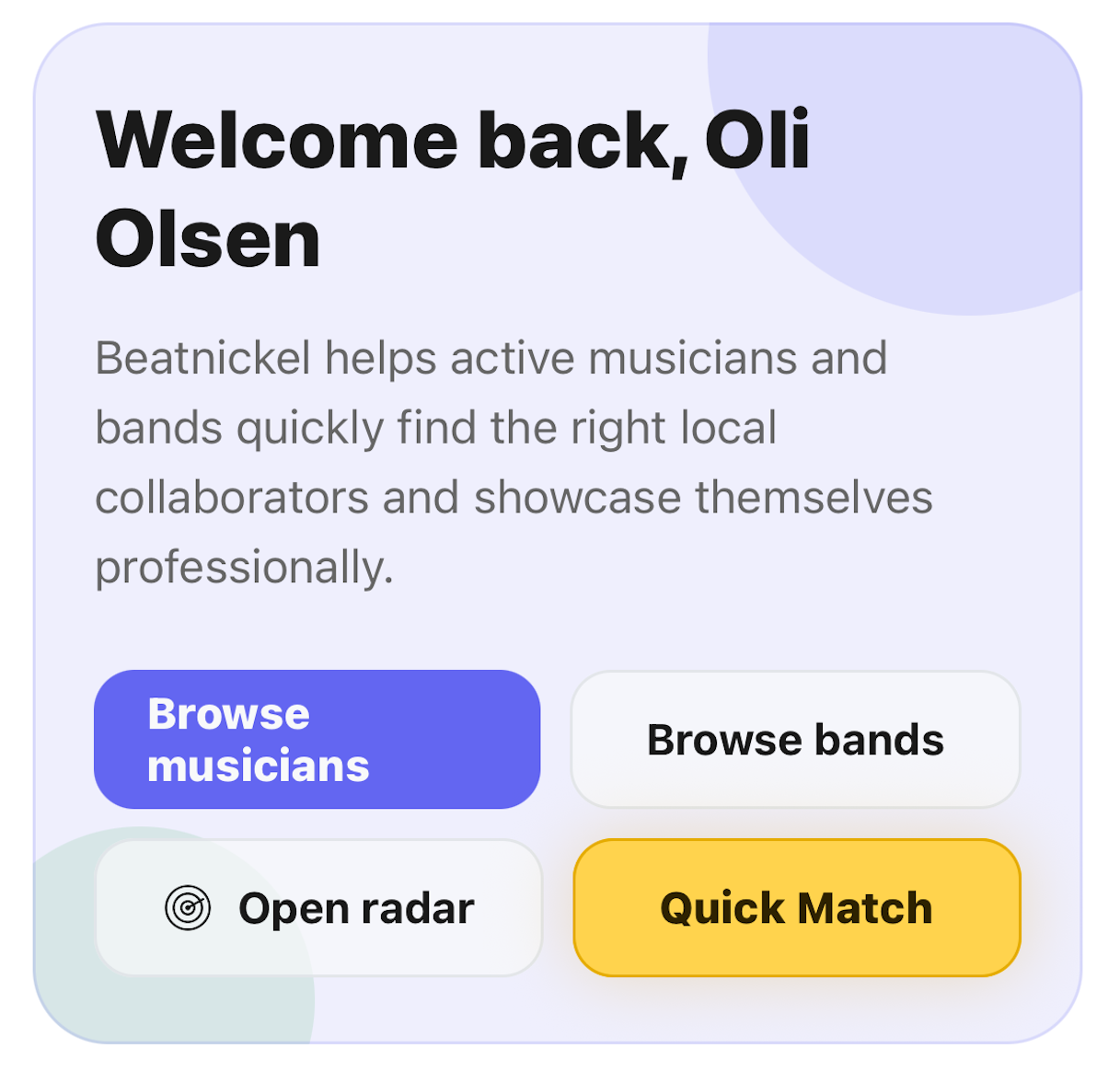
Beatnickel is conceived as that shared infrastructure. Not another platform competing for attention, and not just a booking or promotion tool.
The ambition is to bring the music scene together in one coherent system where relationships, projects, and opportunities can coexist. Where it’s natural to move from searching for a band to playing shows, collaborating with others, and developing a musical life over time.
The music scene doesn’t need more talent, more posts, or more noise. It needs structures that connect everything. A shared infrastructure that allows relationships to grow instead of constantly being reset.
When the foundation is in place, creativity can truly flourish. Beatnickel is one attempt at building that foundation. Not as a quick fix, but as a long term shared space for the music scene.
Other blogs









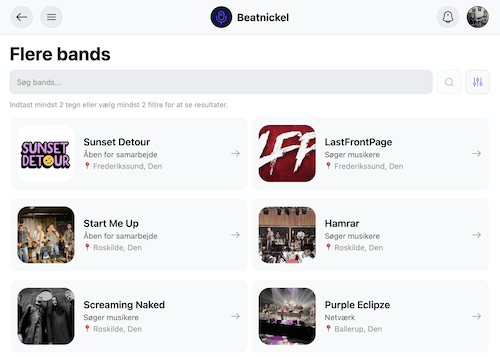

































Discover a platform built to connect musicians, simplify bookings, and fuel creative growth.
Find us on social networks


