
Soon available on


How municipalities build strong local music ecosystems in a digital age
Date:
2.1.2026
Author:
Oli Olsen
How municipalities build strong local music ecosystems in a digital age
Municipalities are searching for new ways to strengthen culture, youth communities, and creative industries. Music is one of the most overlooked growth engines. With the right digital infrastructure, local music ecosystems can become stronger, more inclusive, and measurable.
Music plays a central role in many people’s lives, yet in municipal development it is often reduced to events, grants, or short term projects. In a digital age, this is no longer enough. If music is to create real value for young people, community life, and local businesses, it requires cohesion, visibility, and lasting connections between local actors.
Today, municipalities face several parallel challenges. Young people are looking for meaningful communities and creative spaces. Music schools focus on education and talent development but often lack a bridge to the real local music scene. Venues and cultural institutions want stronger local engagement but struggle to reach the right audiences. At the same time, politicians and administrations demand documentation, impact, and measurable value.
This creates a need for a new kind of cultural infrastructure. Not more isolated projects, but a shared digital foundation.
Music as a local growth engine
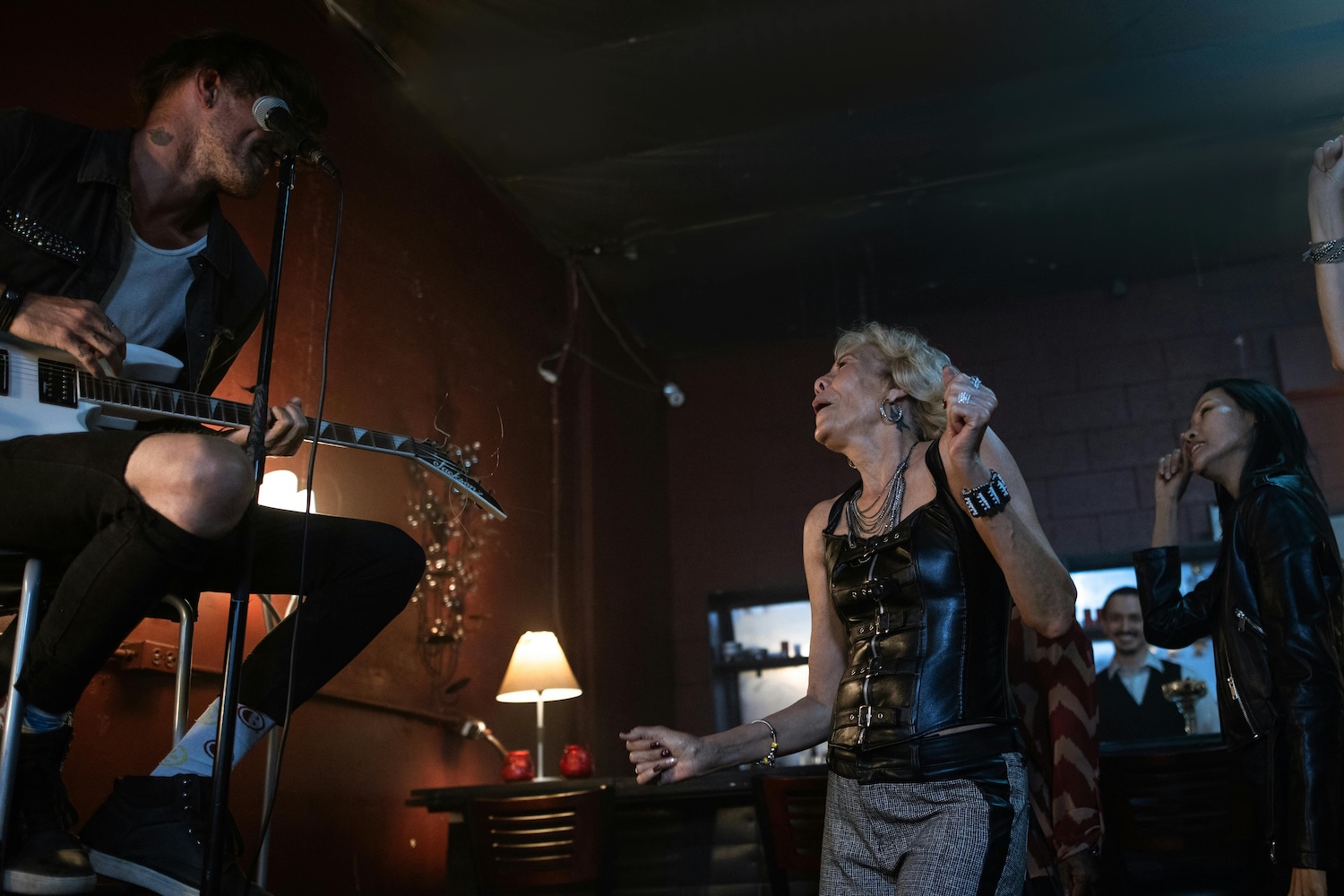
Local music ecosystems create more than concerts. They create identity, belonging, and skills. Young people develop collaboration, discipline, and creative thinking. Adults find community and long term engagement. Small creative businesses grow around rehearsal spaces, studios, teaching, and live activity. When music ecosystems work, they strengthen both social wellbeing and the local economy.
The challenge is that these effects are often invisible in everyday municipal decision making. Activities are fragmented, analog, and disconnected, making strategic investment and long term development difficult.
From fragments to ecosystem
In many municipalities, music life exists in silos. Music schools use their own systems. Associations communicate in closed groups. Venues promote themselves independently. As a result, young people fall between structures and collaboration opportunities are missed.
Strong local music environments require an ecosystem where actors can see each other, find each other, and work together. This is where digital connectivity becomes essential. Not as a replacement for physical music life, but as the connective tissue that holds it together.
Digital infrastructure instead of campaigns
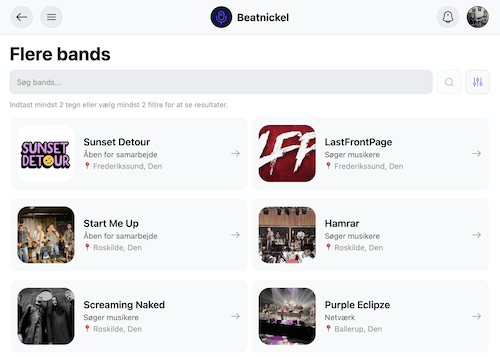
Rather than relying on temporary initiatives, municipalities can think of music as infrastructure. A digital platform can gather profiles, activities, and networks in one place. Young musicians can find each other and form bands. Music schools can follow students as they move into the local music scene. Venues can discover emerging local talent. Municipalities gain insight into activity, participation, and development over time.
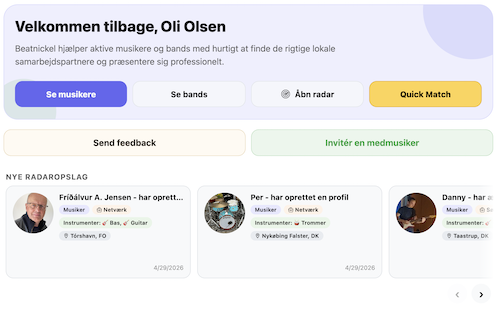
Beatnickel functions as exactly this kind of digital infrastructure. The platform connects young musicians, bands, music schools, venues, and local stakeholders into one shared ecosystem. This makes music life more accessible for citizens and more manageable for municipalities.
Measurable cultural and social value
One of the biggest challenges in cultural policy is documentation. What is the real return on investment. When music ecosystems are supported digitally in the right way, data becomes a natural byproduct. Activity levels, collaborations, bands, events, and participation can be measured without shifting focus away from people and creativity.
This gives municipalities a stronger foundation for decision making. It becomes possible to identify where engagement grows, where gaps exist, and how initiatives affect wellbeing and community life. Music moves from intuition to strategic resource.
Strong local music ecosystems do not emerge by accident. They require structure, relationships, and direction. In a digital age, it is no longer enough to support isolated activities. Municipalities that want to strengthen culture, youth engagement, and creative industries should invest in digital infrastructure that connects music life as a whole.
When young people, music schools, venues, and local actors are brought together in a shared ecosystem, cultural, social, and economic value is created. Music becomes visible, accessible, and measurable. Not as decoration, but as a real driver of local development.
Other blogs



















































Discover a platform built to connect musicians, simplify bookings, and fuel creative growth.
Find us on social networks


