
Soon available on


The Music Scene Rewards Flexibility but Punishes Stability
Date:
14.2.2026
Author:
Oli Olsen
The Music Scene Rewards Flexibility but Punishes Stability
In today’s music culture, saying yes to everything is seen as a strength. Being flexible. Jumping between projects. But when flexibility becomes the ideal, stability is often undervalued. And that weakens quality, trust, and shared growth.
Flexibility has become a virtue in the modern music scene. Musicians are expected to step in at short notice, juggle multiple projects, and constantly adapt to new constellations. The more available and uncommitted you are, the more attractive you appear.
But there is a downside.
When flexibility becomes the norm, stability can start to look limiting. A long term band may seem less exciting than a series of short lived collaborations. Repetition can be mistaken for stagnation. Commitment can look like a lack of ambition.
The result is a music culture where many are constantly active, but fewer are building something that truly lasts.
The paradox of flexibility
Flexibility creates opportunity. It opens doors. It makes it easier to explore new ideas and meet new collaborators.
But music is not only about showing up and playing. It is about developing a shared language. That takes time. It requires repetition. It demands commitment.
The most compelling bands rarely sound magical at the first rehearsal. They evolve over many rehearsals. Through misunderstandings. Through adjustments. Through periods of doubt. Stability creates space to refine expression, build trust, and shape a shared identity.
When musicians constantly move on to the next thing, depth is often lost.
Trust is built through repetition
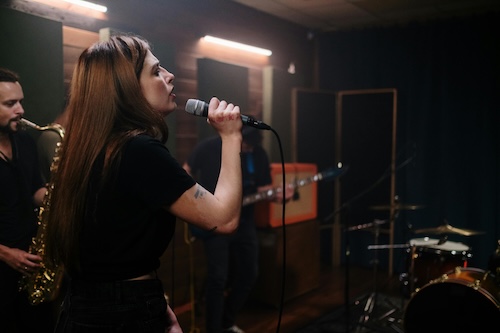
Trust in music is tangible. You feel it in the timing. In the eye contact on stage. In the silence between notes.
It grows when you know how the others will react. When you dare to take risks because you trust someone will catch you. That kind of connection cannot be rushed. It is built over time.
If everyone is always ready to move on, relationships become fragile. And fragile relationships weaken both quality and collective development.
Stability is not stagnation
There is a misconception that long term constellations lead to creative stagnation. That staying together means repeating yourself.
In reality, stability can enable greater artistic risk. When the foundation is solid, musicians can experiment more boldly. They can challenge each other without fearing that the collaboration will collapse at the first disagreement.
Stable partnerships create the conditions for deeper creativity. They allow long term ambition to grow.
When systems favor the new
Part of the issue lies in the systems where musicians meet. Many platforms emphasize what is new, fast, and constantly changing. Quick matches. New contacts. Temporary projects.
But long standing bands and repeated collaborations are rarely highlighted as strengths in themselves.
If stability is not visible, it is not rewarded.
Making lasting collaboration visible
Digital tools can help change this.
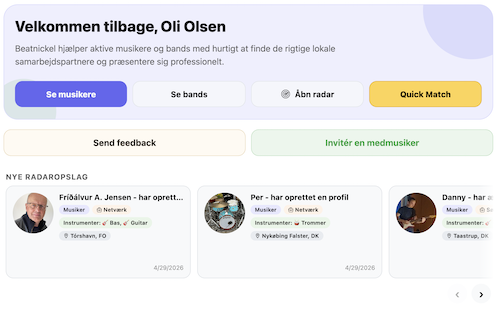
When stable bands and long term collaborations are clearly visible, they stop being invisible assets. When you can see who has played together for years, who repeatedly chooses to work together, and which constellations truly endure, the narrative shifts.
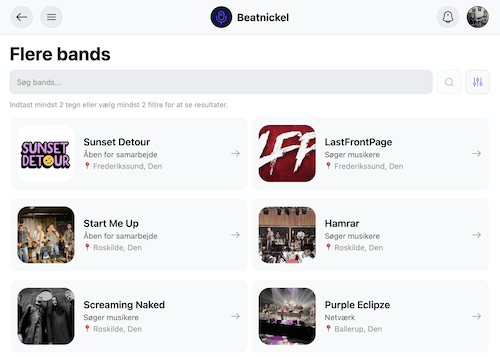
On Beatnickel, lasting relationships are not treated as limitations. They are visible and valued. Bands have clear identities. Repeated collaborations are documented. Stability becomes a strength rather than a weakness.
That creates incentives to build something together instead of constantly chasing the next opportunity.
The music scene needs flexibility. But it needs stability just as much.
Without stable relationships, we lose depth, quality, and trust. If we only reward those who are always available, we risk overlooking those who stay and build.
If we want a stronger music culture, we must make stability visible and attractive again. Because the most powerful music is often born in relationships that endure.
Other blogs














































Discover a platform built to connect musicians, simplify bookings, and fuel creative growth.
Find us on social networks


