
Soon available on


The Hard Conversation in a Band: How to Handle Member Changes Without Damaging Relationships
Date:
18.12.2025
Author:
Oli Olsen
The Hard Conversation in a Band: How to Handle Member Changes Without Damaging Relationships
Saying goodbye to a band member or inviting a new one in is one of the most emotional moments in a band’s life. When these conversations are postponed, chemistry, motivation and progress suffer. This article offers an honest guide on how to have the talk early and make the process more professional.
When the music stops between people
Member changes in bands are rarely just logistical decisions. They involve friendships, identity, loyalty and the shared dream you have been building over time. That is why the conversation often gets postponed. Many hope the issues will disappear or that everyone will magically align in ambition and commitment.
In reality, tension grows in silence, and relationships usually break long before the lineup does.
Why it hurts so much
Telling someone that the collaboration is no longer working feels like personal criticism, even when it is mostly about style, ambition, time and dynamics. And when bringing someone new into the band, many fear disrupting the balance already in place.
It is natural to avoid conflict, but avoidance has destroyed far more bands than honest conversations ever have.
Have the conversation sooner than you think
The most important rule is timing. If a member regularly skips rehearsals, does not learn the material, drains the room or does not share the band’s goals, something needs to be addressed.
Early conversations give space for adjustments. Late conversations almost always end in a breakup.
Focus on the project, not the person
Professional bands talk about roles, expectations and responsibilities, not about blame. Use concrete examples, be clear about the consequences and keep the tone respectful. A strong framing is: We are talking about the project and how to make it function. This is not about your value as a person.
It lowers the emotional pressure and creates a safer space for everyone involved.
Use tools that make the decision easier
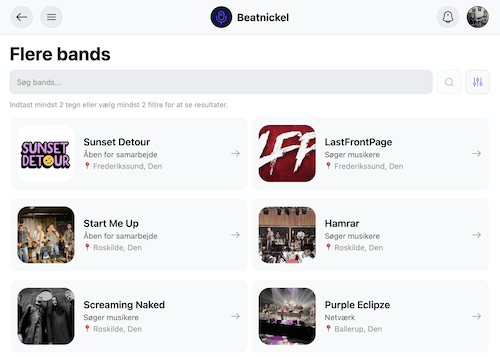
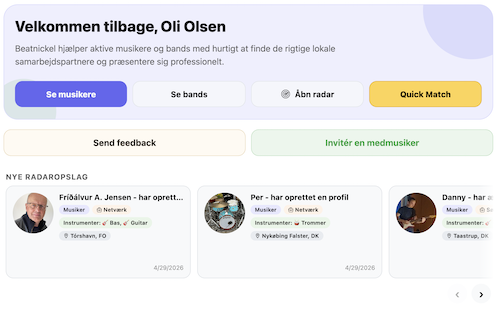
This is where Beatnickel can help. Beatnickel’s profiles give bands a neutral foundation for comparing ambition, experience, musical direction, time commitment and goals.
The matchmaking tool helps identify musicians who naturally fit the project’s level and rhythm.
This shifts the process from personal to professional. It allows you to say: We make decisions based on what the project needs, not on who we like most.
When new members join
A strong onboarding begins with clear expectations. Who decides what. How often you rehearse. When someone is ready for live shows. How communication works.
Many conflicts come from assumptions rather than conversations.
Beatnickel’s profile structure can be used as a template because it forces bands to articulate what is usually left unsaid.
Lineup changes are inevitable, but they do not have to be destructive. Honest communication, clear expectations and professional tools make the process easier for everyone. The earlier the conversation happens, the greater the chance of preserving relationships and keeping the project alive.
With Beatnickel’s structured profiles and matchmaking, bands can make difficult decisions on a neutral basis and choose the members who best match their goals and musical direction. The music becomes stronger when the foundation between people is solid.
Other blogs





















































































Discover a platform built to connect musicians, simplify bookings, and fuel creative growth.
Find us on social networks


