
Soon available on


AI has made the polished music profile cheap, but credibility expensive
Date:
28.3.2026
Author:
Oli Olsen
AI has made the polished music profile cheap, but credibility expensive
It has never been easier to look professional as a musician, band, or producer. In 2026, images, bios, covers, demos, and branding can be created quickly and cheaply with AI. But the easier it becomes to look strong online, the harder it becomes to judge who actually works well in the rehearsal room, in the studio, or on stage. That is why credibility is not becoming less important. It is becoming more valuable.
A polished profile is no longer a signal in itself
A few years ago, building a strong music profile required time, money, and connections. Good press photos were expensive. A well written bio often required help. Covers, visual identity, and branding were things many artists only managed to sort out later in their journey.
Today, things are different. With AI, almost anyone can create a convincing presentation of themselves. A new musician can generate a professional bio in minutes. A band can create images, texts, and posts that look sharp and polished. Demos can be improved. Videos can be edited quickly. The entire digital layer around the musician has become much cheaper to produce.
That is not a problem in itself. On the contrary, it can be a major advantage. More people get the chance to present themselves properly. More people can get started without a large budget. It makes access to a professional looking profile more democratic.
But it also creates a new challenge. When almost everyone can look strong online, it becomes much harder to tell the difference between the person who can actually deliver in real life and the person who only delivers in the presentation.
Music life does not run on appearance alone, but on behaviour
In music, a polished profile is rarely enough. What still matters most is how you function with other people. Do you show up on time. Are you prepared. Can you listen. Can you collaborate. Can you lift a rehearsal. Can you stay focused in the studio. Can you deliver under pressure on stage.
This is exactly where the challenge begins. These qualities are difficult to see in a picture, a bio, or a polished video. A profile can look impressive without the person behind it functioning well in real life. On the other hand, a skilled and reliable musician can easily be overlooked if they are not equally strong in their digital presentation.
This means the music world increasingly needs new ways of reading credibility. Not only through aesthetics, but through patterns, relationships, and actions.
Young musicians, amateurs, and professionals face the same problem
It is easy to think this is only a problem for professionals. It is not.
Young musicians may struggle to understand who they can safely start a band with. A profile can look mature and professional even if the actual experience is limited. Amateur musicians may spend a great deal of time reaching out to people who seem relevant, but in practice do not match their ambition, stability, or way of collaborating. Professionals can also be faced with profiles that promise much more than they can truly deliver.
So this is a broad problem. It affects the entire music ecosystem. The easier it becomes to build a strong surface, the more valuable it becomes to understand what is actually behind it.
Credibility is changing character
In the past, credibility was often read through classic signals. A good press photo. A polished website. A strong EPK. A professionally written text. These things still matter, but they are no longer enough on their own.
In 2026, credibility is increasingly relational. It is about who knows you, who you play with, which contexts you are part of, and how you behave over time. It is about traces of real collaboration. About activity, continuity, and alignment between what you say and what you actually do.
This is an important shift because music is not a purely visual product. Music is created between people. That is why credibility must also be rooted in something human and practical.
Why Beatnickel points in a more credible direction
Beatnickel cannot solve everything. But it points toward something important in a time when surface has become cheap.
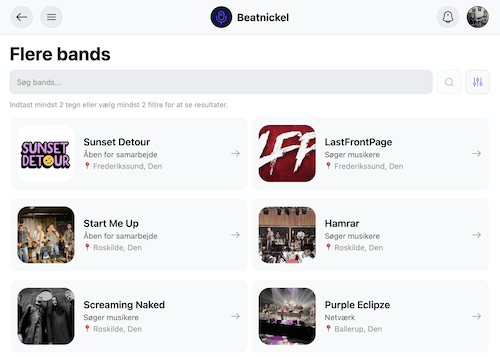
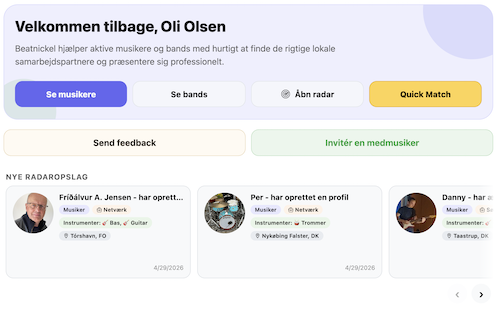
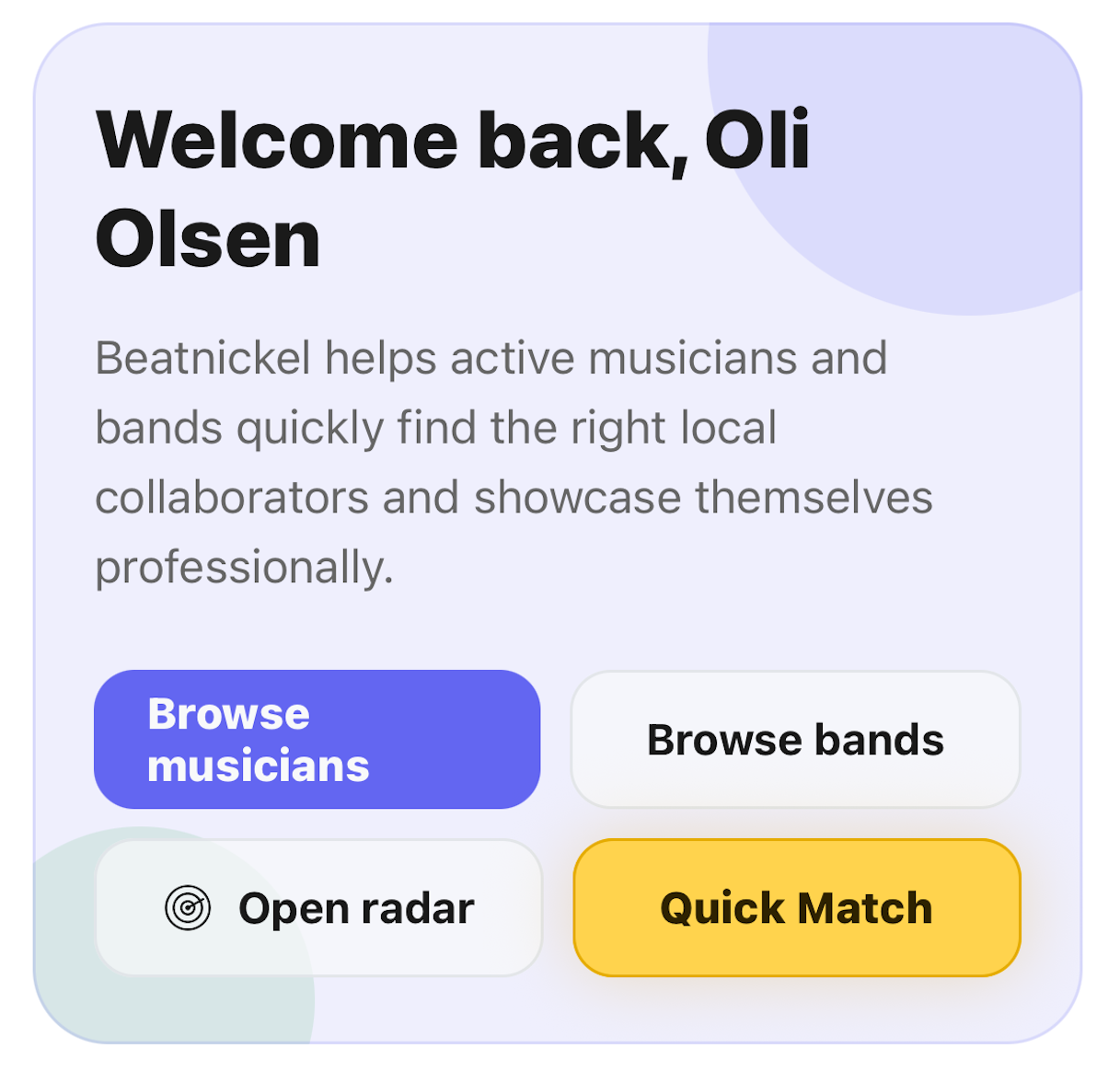
Here, a profile is not only about looking good. It is also about roles, connections, activity, and actual collaborations. That makes it easier to understand a person in a musical context. Not only as a brand, but as a participant in a community.
When credibility becomes more behaviour based, it becomes more meaningful to look at the relationships a person has built. Which bands they are connected to. How active they are. Which signals come from real participation in music life. That creates a more nuanced picture than a polished bio alone.
This matters because musicians are not only looking for talent. They are looking for people they can function with. People they can trust. People who fit the concrete reality of a band, a project, or a production.
From profile to practice
What matters now is not only whether someone has a strong presentation. What matters is whether that presentation aligns with practice.
Have they chosen roles that make sense. Do they have real connections. Does their activity show that they are actually present in the scene. Does the profile feel like part of something living, or like an isolated facade.
This does not mean branding is irrelevant. Quite the opposite. A good profile still matters. But it has to be supported by something more. In a market where everyone can polish the surface, substance becomes the real difference.
The future of music needs better signals
If music life is to work well in the coming years, it needs better ways to show the right things. Not only talent and style, but also reliability, ability to collaborate, and relevance.
That requires platforms and communities that reward more than a polished exterior. Platforms where credibility grows through participation and relationships. Where people can be understood through more than presentation alone. Where it becomes easier to find the ones who do not just look right, but are actually right for the collaboration you are looking for.
AI has made it cheap to look strong as a musician. That is a real advantage for many people, but it also makes music life harder to navigate. When images, bios, branding, and demos can be upgraded quickly and cheaply, it becomes much harder to judge who actually works well in real life.
That is why credibility is becoming more expensive. Not necessarily in money, but in importance. It has to be built through behaviour, relationships, activity, and actual collaborations. This is exactly where Beatnickel has a strength. The platform makes credibility more human and less superficial. And that may become essential in a music world where looking polished is no longer the same as being trustworthy.
Other blogs































Discover a platform built to connect musicians, simplify bookings, and fuel creative growth.
Find us on social networks


