
Soon available on


Music opportunities still go to the people who already know someone
Date:
2.4.2026
Author:
Oli Olsen
Music opportunities still go to the people who already know someone
Too many bands, jobs, and music projects are still found through closed networks, private messages, and old connections. That makes music life harder to enter for young talent and skilled amateurs, even when they have the ability and the drive. If the music scene is going to become stronger, more open, and more vibrant, people need better access to relevant connections.
There is still an invisible entry ticket in music. It is not only about talent, experience, or the willingness to work hard. It is often about who you already know.
Many opportunities are never really posted openly. A bassist is found through a friend. A singer is recommended in an internal group chat. A band finds a replacement by reaching out to someone they have played with before. A project ends up with a person who is already close to the scene. For people outside the right circles, it can feel like the door is already closed before they even get a chance to knock.
This is a major challenge for young musicians trying to find their first collaborators. It is also a challenge for adult amateurs and semi professional musicians who have the skills but lack social access. And it is a challenge for the music scene as a whole, because opportunities often go to familiar faces instead of the most relevant people.
A closed music scene creates imbalance
When connections matter more than visibility, imbalance follows. Not necessarily because people want to exclude others, but because most people choose the easiest path. They reach out to the people they already know. They ask in the groups they are already part of. They choose familiarity and speed instead of opening the search.
That is human. But it also makes music life less open.
For a young musician, it can mean never getting the chance to show what they can do. For a skilled amateur, it can mean staying on the outside even when they are ready and motivated. For bands and projects, it can mean missing out on people who could actually be the right match.
When opportunities circulate within the same small networks, the scene becomes more closed, less dynamic, and less diverse. That limits both growth and renewal.
It is not only about talent
Many musicians discover that being good is not enough. You can be reliable, prepared, musically strong, and ready to join new collaborations. Still, you can be overlooked if nobody knows you exist.
That is where the frustration begins. Not because people expect something to be handed to them, but because they want a real chance to be discovered and judged on what they can actually contribute.
In a healthy music scene, access to opportunities should be based more on relevance. What instrument do you play. What genre do you work in. What are you looking for. Where are you based. How active are you. What kind of collaboration do you want to be part of.
When access depends on private entry instead, the music scene loses something important. It loses transparency. It loses movement. And it loses potential collaborations that never get the chance to happen.
Old structures still survive in digital form
Many people assume that digital platforms automatically make music life more open. But that is not always true. If opportunities are still shared in closed groups, private messages, and small networks, then digital simply becomes a new version of the same old structure.
Technology alone does not solve the problem. What matters is how access is designed.
If visibility depends on whether you were already invited in, then the platform is not opening anything. It is simply another place where the same people keep finding each other again.
That is why it matters to build solutions where musicians and bands can be discovered because they are relevant, not because they already belong to the right inner circle.
Beatnickel wants to open the door wider
Beatnickel is built on a different idea. Relevant connections should not be reserved for the people who are already inside.
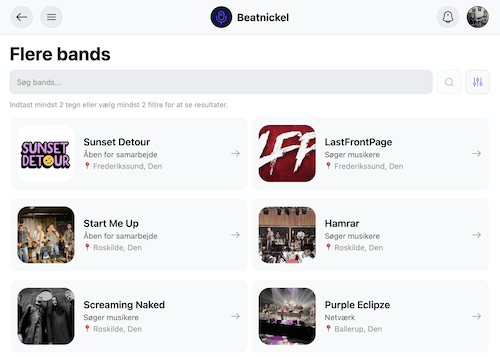
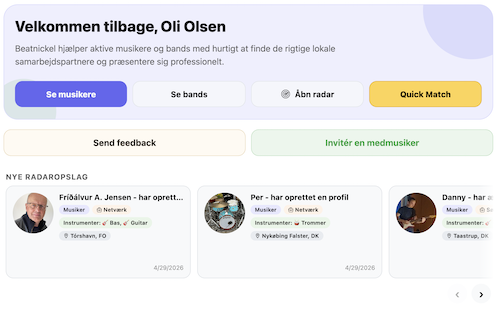
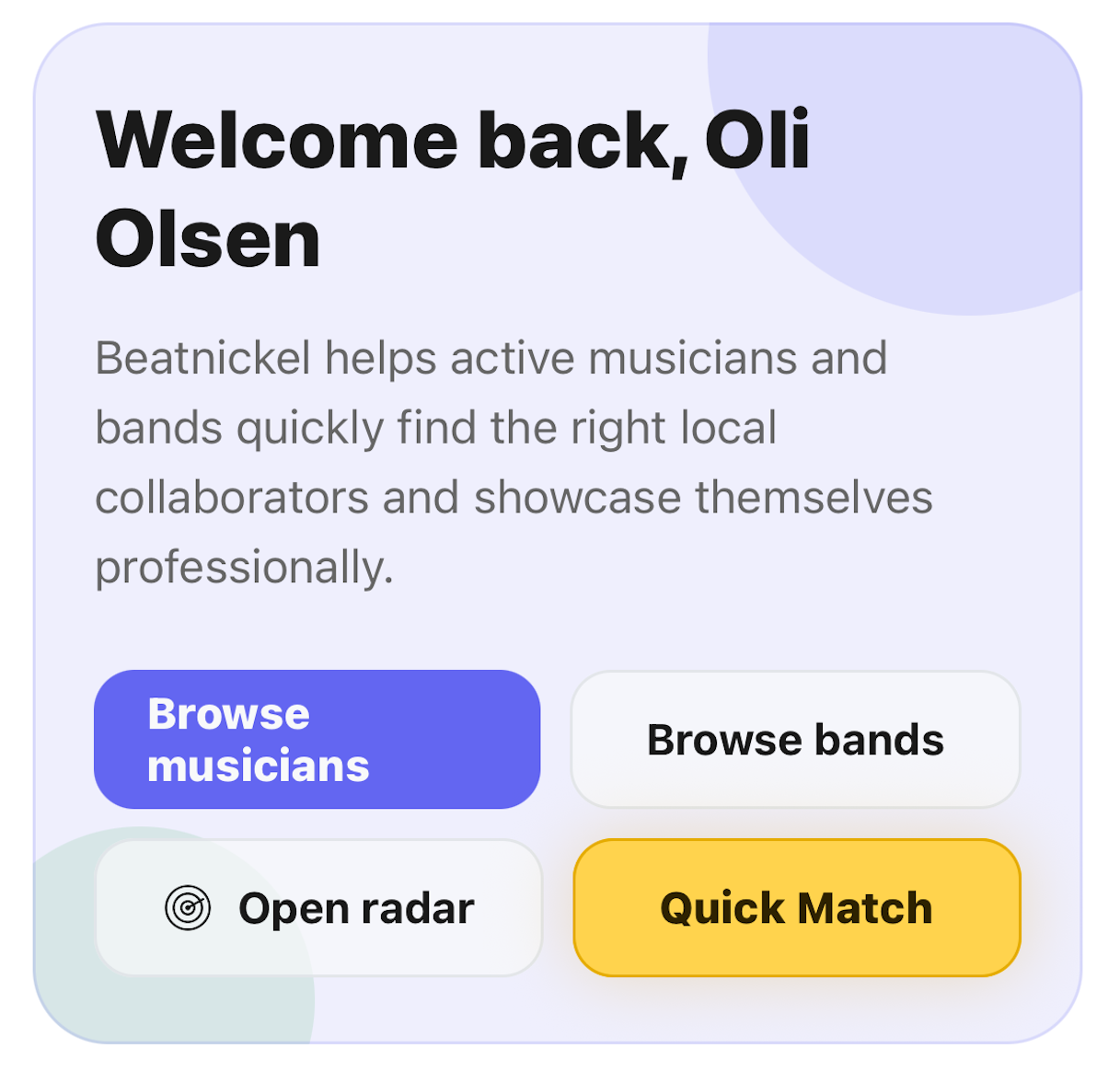
On Beatnickel, visibility and matching are not meant to depend first on private access. They are meant to depend on what you play, what you are looking for, where you are, and which collaborations make sense. The goal is to make it easier for musicians and bands to find each other based on relevance instead of relationships alone.
That means a young guitarist should not have to know the right people to be considered. It means a band should be able to find a new bassist without searching only inside its own network. And it means skilled amateurs should have a more real chance to be seen, heard, and chosen.
This is not an argument against relationships. Relationships will always matter in music. But relationships should not be the only road in.
A stronger music scene needs open access
When more people gain access to relevant opportunities, the music scene becomes stronger. More collaborations happen. More people find their place. More bands solve real needs. And more musicians get the chance to take the next step.
Openness is not only good for the individual. It is good for the scene as a whole. A more open music environment creates more activity, more movement, and a greater chance for new projects and new constellations to emerge.
That is how you build a living music scene. Not only by strengthening the people who are already inside, but also by making it easier for new people to get in.
Music opportunities still too often go to the people who already know someone. That makes the path into music life unnecessarily narrow for young musicians, amateurs, and others who have the ability but not the right contacts. If the music scene is going to be more open, fair, and dynamic, people need better access to relevant connections. Beatnickel is built on that idea. Visibility and matching should be driven by relevance, activity, and musical direction, not only by private networks and old relationships.
Other blogs














































Discover a platform built to connect musicians, simplify bookings, and fuel creative growth.
Find us on social networks


