
Soon available on


Musicians Are Chosen for Their Output, but Rejected for Their Way of Working
Date:
15.4.2026
Author:
Oli Olsen
Musicians Are Chosen for Their Output, but Rejected for Their Way of Working
Talent, sound, and experience are not always what determine whether a musical collaboration lasts. Many connections look strong on paper and sound promising online, but fall apart in practice because people work differently. When work style, tempo, and expectations do not match, friction appears quickly. That is why it is not enough to match only on genre and skill level.
In the music industry, people are often judged by what is easy to see and hear. That might be demos, videos, photos, previous projects, experience, and style. All of that matters, of course. But it only tells part of the story.
Two musicians can both be highly skilled. They can play the same genre, have the same ambitions, and even admire each other’s work. Still, the collaboration can fail almost immediately. Not because either person is not good enough, but because they work differently.
Some musicians thrive on spontaneity. They want to meet in the rehearsal room, jam freely, and let ideas emerge in the moment. Others prefer structure, clear agreements, and a plan from start to finish. Some love a slow creative process where things are allowed to evolve over time. Others want to move quickly, make decisions, and deliver results.
Neither approach is wrong. The problem only starts when those differences are not visible from the beginning.
A good match is about more than sound
When musicians look for new collaborations, they often focus on the artistic fit. Does the genre match. Is the skill level high enough. Does the profile look professional. Does the person have the right references.
But many collaborations that later fall apart do not fail because of the music itself. They fail because everyday working habits do not fit. One person replies quickly and expects the same in return. Another replies when there is time and space. One person wants rehearsals booked weeks in advance. Another takes things week by week. One sees the project as a serious priority. Another sees it as something that should stay flexible and enjoyable.
When those differences only become clear after several conversations, rehearsals, and growing expectations, the disappointment can be significant. Not because anyone did something wrong, but because the match was made on visible traits while the decisive factors were overlooked.
Work style is a hidden factor in music
In many other industries, working style is already recognized as an important part of collaboration. People talk about processes, communication, deadlines, meeting culture, and work habits. In music, this is often overlooked, even though it plays a huge role.
That may be because music is still closely associated with passion, chemistry, and creativity. And those things do matter. But precisely because music is tied so closely to identity and emotion, a mismatch in work style often becomes even more obvious. When people are not aligned on pace, expectations, or the way they work, it quickly feels personal, even though it is really about style and structure.
That means many good musicians are rejected for reasons that have nothing to do with quality. They are not turned down because they cannot play. They are turned down because their way of working does not fit the group or the project.
Clear expectations create stronger collaborations
A better musical match therefore requires more transparency. Not only about genre, instrument, and experience, but also about working style. How do you write music. How do you rehearse. How fast do you want to move. How structured are you. How much improvisation do you want. How much communication do you expect between rehearsals and projects.
The earlier those things become clear, the better the chances of finding people you genuinely work well with. That creates better relationships, fewer misunderstandings, and more durable collaborations.
It also improves quality in an important way. When people work in a way that suits them, they often bring more energy, more trust, and better results. That strengthens both the creative process and the final output.
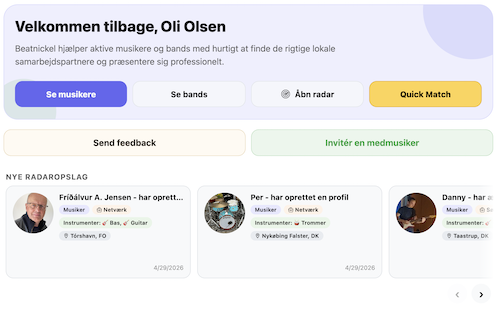
Beatnickel can make the invisible more visible
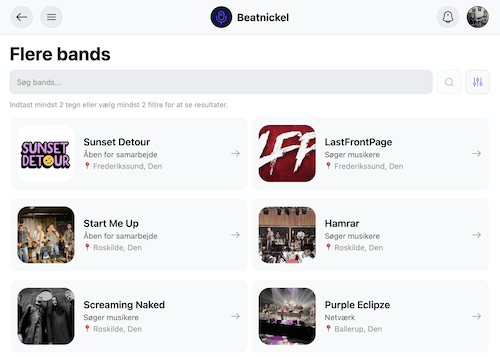
This is where Beatnickel has a clear advantage. The platform can highlight more than sound, images, and presentation. It can make it easier to show how you actually work as a musician or band.
That matters because a good collaboration is rarely only about what people play. It is also about how they show up, communicate, develop ideas, and move a project forward. When that dimension becomes part of the matching process, it becomes easier to find people who fit in practice, not just in theory.
That can be the difference between a collaboration that looks promising in a feed and one that actually lasts in real life.
Many musical collaborations do not fail because of a lack of talent, but because of differences in work style. That is an overlooked truth in music. We often choose each other based on output, but we live with each other in the process. That is why working style should matter more when musicians and bands look for new collaborations.
Beatnickel points in an important direction by making it easier to match on more than genre and skill level. When the platform helps musicians find people who also fit their way of working, it increases the chances of collaborations that both sound good and work in real life.
Other blogs






































































Discover a platform built to connect musicians, simplify bookings, and fuel creative growth.
Find us on social networks


