
Soon available on


Music life has become a puzzle of part time commitments
Date:
15.4.2026
Author:
Oli Olsen
Music life has become a puzzle of part time commitments
For many musicians in 2026, the real challenge is not a lack of passion, talent, or ambition. It is a lack of uninterrupted time. School, university, work, children, and freelance jobs make it harder to take part in musical communities built on fixed routines and constant availability. Music has not become less important to people. It has simply become harder to fit into modern everyday life.
There are still plenty of people who deeply care about making music. They rehearse, write, produce, dream, and look for others to create with. But the reality around them has changed. Where many once could shape large parts of their week around the band, the rehearsal room, or the studio, more people now live with multiple parallel commitments.
A high school student has changing schedules, assignments, and a part time job. A university student balances lectures, exams, and paid work. A parent with young children may be able to play, but only on certain evenings and often at short notice. A freelancer may be available one week and fully booked the next. The passion for music is still there. But the uninterrupted time that many musical collaborations once took for granted has become much harder to find.
This creates a new kind of friction in music life. Not because people are less serious, but because their lives are more complex. Many still want to be involved, but not on the condition that they can rehearse three times a week, be spontaneous every weekend, and always be available at short notice. It is not necessarily commitment that has weakened. It is the logistics of life that have become more demanding.
Music still matters, but it has to fit real life
There is still a romantic idea of music as something you throw yourself fully into if you truly want it. That the most dedicated people always say yes, always show up, and always put music first. But that idea fits reality less and less for many musicians.
Today, there are highly skilled and motivated people who want to join a band, start projects, take session work, or be part of a creative community, but who can only commit in pieces. They may be able to rehearse every other week. They may only be available for selected gigs. They may be able to join for a period and then scale back. That does not make them less valuable as collaborators. It simply makes them more real.
When music life does not make room for that reality, it does not just lose flexibility. It loses talent too. Some people drop out because they feel they do not fit the old expectations. Others never reach out in the first place because they already know they cannot live up to the ideal of constant availability.
The conflict in 2026 is time, not willingness
One of the biggest misunderstandings in music life right now is that inconsistent availability is often interpreted as low motivation. But in many cases, the opposite is true. Many people are fighting to keep music alive in their lives precisely because it matters so much to them. They are trying to make room for it between responsibilities, finances, and family life.
That means new musical collaborations increasingly need to be built on clarity instead of assumptions. What are you actually looking for. How often can you meet. Are you ready for a fixed band, loose collaborations, studio work, live sessions, or something more project based. What role do you want. What can you realistically commit to.
When those questions are clear from the beginning, it becomes easier to find the right matches. Not perfect matches in theory, but realistic matches in practice. That is often where the best collaborations begin.
Why intention and role matter more than old norms
In a more fragmented music life, it is no longer enough to know that someone plays guitar or sings. What matters just as much is knowing what they want, how they work, and what kind of collaboration they actually have room for in their life.
Some are looking for a permanent band. Others want to join a lower frequency project. Some are open to studio work, substitute gigs, or creative collaborations without fixed weekly rehearsals. Others want to start something new, but only with people who share the same level of ambition and the same realistic time frame.
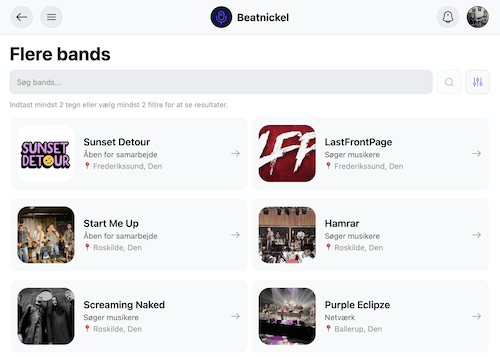
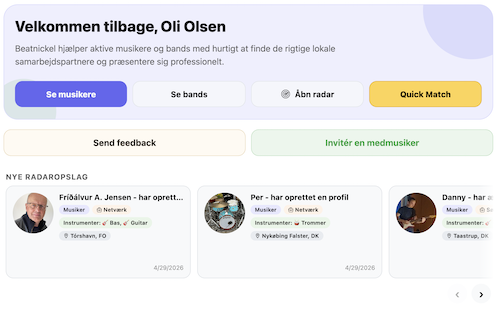
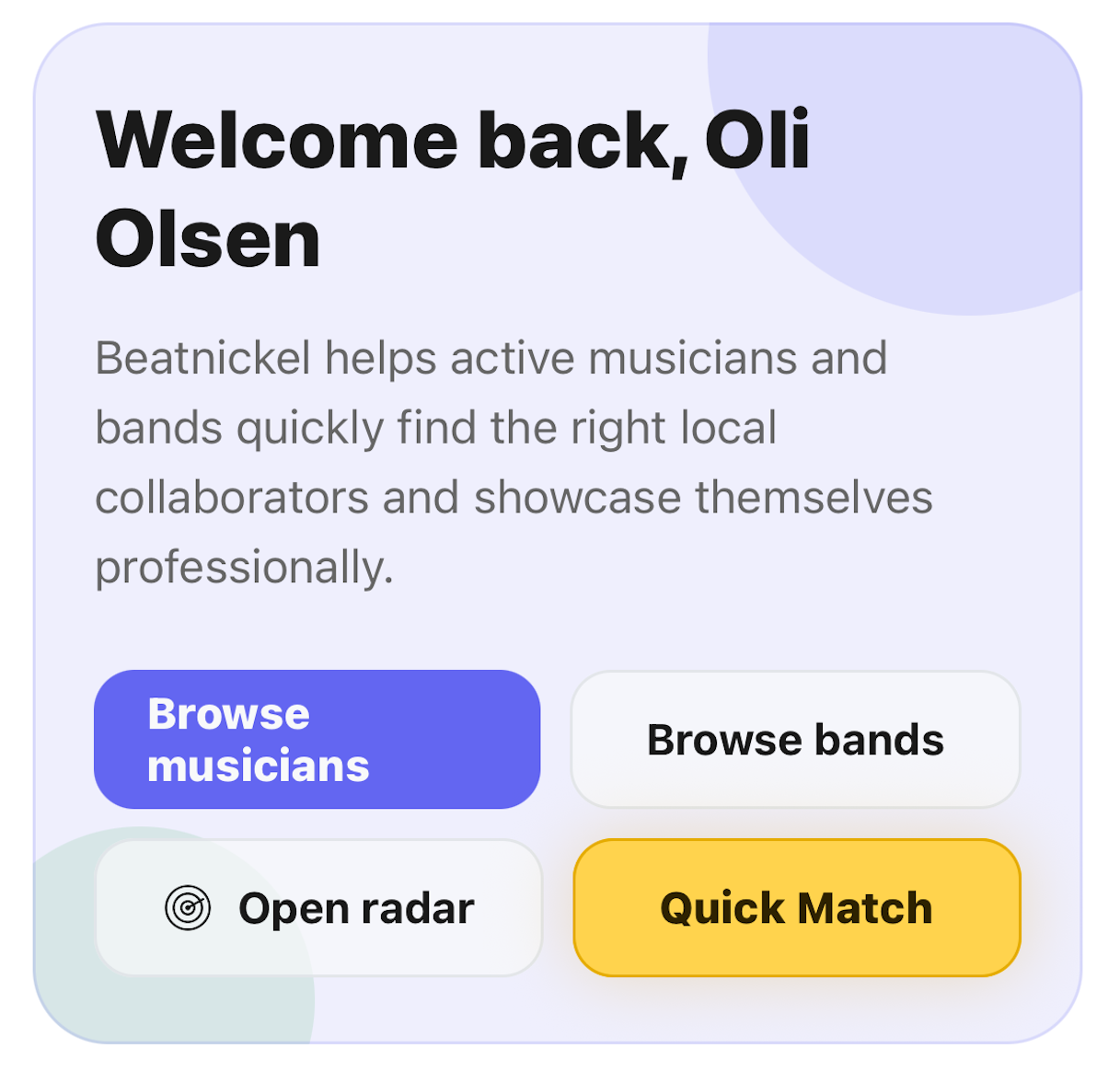
This is where Beatnickel addresses a real challenge in today’s music world. The platform does not start from an outdated idea that everyone can and wants the same thing. It starts from intention, role, and match. That makes it easier to find collaborations that can actually work in a life where time is divided and under pressure.
That is an important difference. Because when you match people based on real life conditions instead of idealized expectations, the chances of creating lasting collaborations become much greater. That applies to young musicians, amateurs, semi professionals, and professionals alike.
A stronger music ecosystem needs more flexible structures
If the music community is going to stay open, vibrant, and sustainable in 2026, it needs to accept a new reality. Not everyone can participate full time. Not everyone can be spontaneous. Not everyone can make the same promises all year round. But many can still contribute something valuable if the framework is right.
That also applies to bands and projects. The clearer you are about needs, expectations, and format, the easier it becomes to find people who truly fit. Not only musically, but also practically and personally. That saves time, reduces disappointment, and creates a better foundation for building something that lasts.
Modern music life needs less myth and more precision. Less guilt and more understanding. Less focus on whether people can be available all the time, and more focus on how they can participate in a way that actually makes sense.
Music life has not become less passionate. It has become more fragmented. In 2026, the big challenge for many musicians is not a lack of desire, but a lack of uninterrupted time. That is why it makes less and less sense to hold on to old ideas about what musical collaboration is supposed to look like.
The future of music will be stronger if it is built around real life conditions. When intention, role, and realistic match matter more than old norms, it becomes easier to create collaborations that actually work. That is exactly where Beatnickel can make a difference by helping musicians and bands find each other in ways that fit the lives they actually live.
Other blogs
















































Discover a platform built to connect musicians, simplify bookings, and fuel creative growth.
Find us on social networks


